
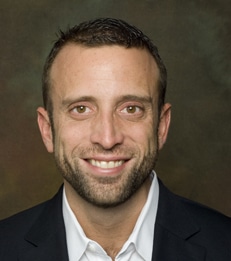
I am a Professor of Management and Organizations at New York University’s Stern School of Business.
Ethical Systems Interview (February 2016)
My Approach to Ethical Systems:
My research investigates the psychology of justice, particularly (though not exclusively) in organizational contexts. As such, I address questions such as how people (e.g., employees) evaluate justice, why they care about justice, and their attitudinal and behavioral reactions to justice.
Most recently, I have also begun to explore factors that shape whether people treat others fairly. One of the key themes of my work is that although people care deeply about justice, there is great variation in how people evaluate what is just or unjust and thus there is great variation in people’s justice-based reactions and behavior. This poses significant challenges for creating organizational and other social systems that fulfill people’s desires and expectations for justice.
Interestingly, I find that many common characteristics of organizations and groups exacerbate these differences among people’s justice judgments and actions. As such, typical and sometimes well-intentioned features of organizational and group life can act as obstacles to creating systems that will be broadly regarded as fair.
My perspective on ethical systems is profoundly shaped by my research on justice. My work highlights the challenges of creating more ethical social systems. At the same time, it suggests factors that may help overcome those challenges.
My Ethical Systems Research Page: Fairness
My Major Relevant Publications:
Press
- When data dooms your company, USA Today (2015)
- The Best Leaders Care About Their Status More Than Their Power, Forbes (2012)
- Fair managers can boost a firm’s bottom line, study shows, USA Today (2012)
Academic Articles
- “The contingent effect of managerial practices,” The Review of Economic Studies. (2020)
- “Organizational identification and workplace behavior: More than meets the eye,” Research in Organizational Behavior (2017)
- “Are status and respect different or two sides of the same coin?” Academy of Management Annals (2017)
- “Looking out from the top: Differential effects of status and power on perspective taking,” Personality and Social Psychology Bulletin (2016)
- “The real effects of relational contracts,” American Economic Review Papers & Proceedings (2015)
- “Fairness lies in the heart of the beholder: How the social emotions of third parties influence reactions to injustice,” article in Organizational Behavior & Human Decision Processes (2013).
- “Differentiating the effects of status and power: A justice perspective,” article in Journal of Personality & Social Psychology (2012).
- “What influences how higher status people respond to lower status others? Effects of procedural fairness, outcome favorability, and concerns about status,” article in Organization Science (2011).