
New Evidence in Favor of Active Internal Whistleblowing
Over two decades ago, two of the largest corporate bankruptcies in U.S. history sprung up one after another—first Enron, then WorldCom—after the companies became mired in accounting and financial fraud. In 2002, in response to these ethics breaches, President Bush passed the Sarbanes-Oxley Act, which established many of the internal controls now common in U.S. […]

 Goal setting is often a subject of discussion about behavioral ethics and internal programs. We’ve seen in recent cases such as at Wells Fargo and Volkswagen how cheating and lying become the norm when performance goals are not reasonably achievable. Recent evidence
 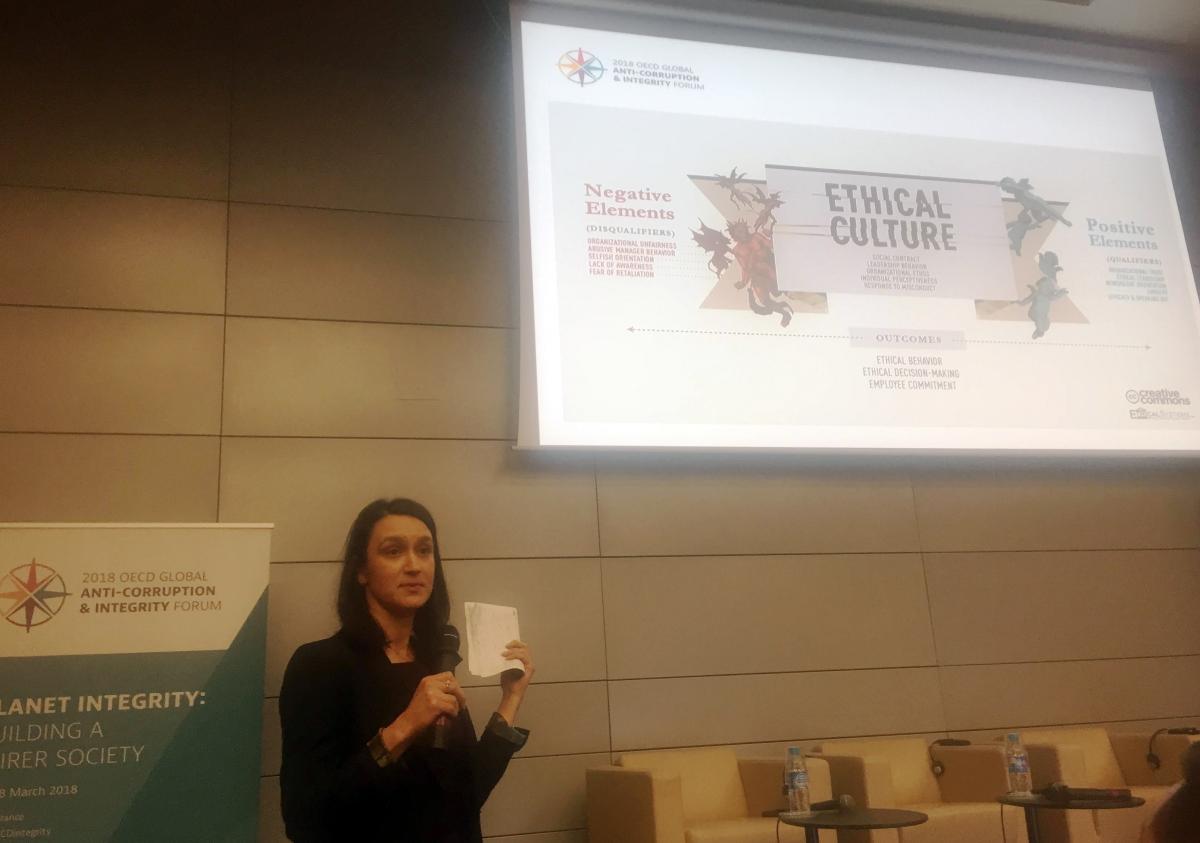 Last week, the Organisation for Economic Co-operation and Development (OECD) had its annual Anti-Corruption and Integrity Forum at their headquarters in Paris. Entitled Planet Integrity: Building a Fairer Society, over 2,000 attendees discussed how integrity plays a role in improving economic inequality, enhances the benefits of public policies and government programs, and more broadly equalizes the gains of globalization.
 Board members have the difficult job of overseeing the success of a firm without getting involved in day-to-day management or operations. Increasingly, they are expected to understand compliance and other risks of misbehavior, particularly as those risks have been shown to impact financial performance.
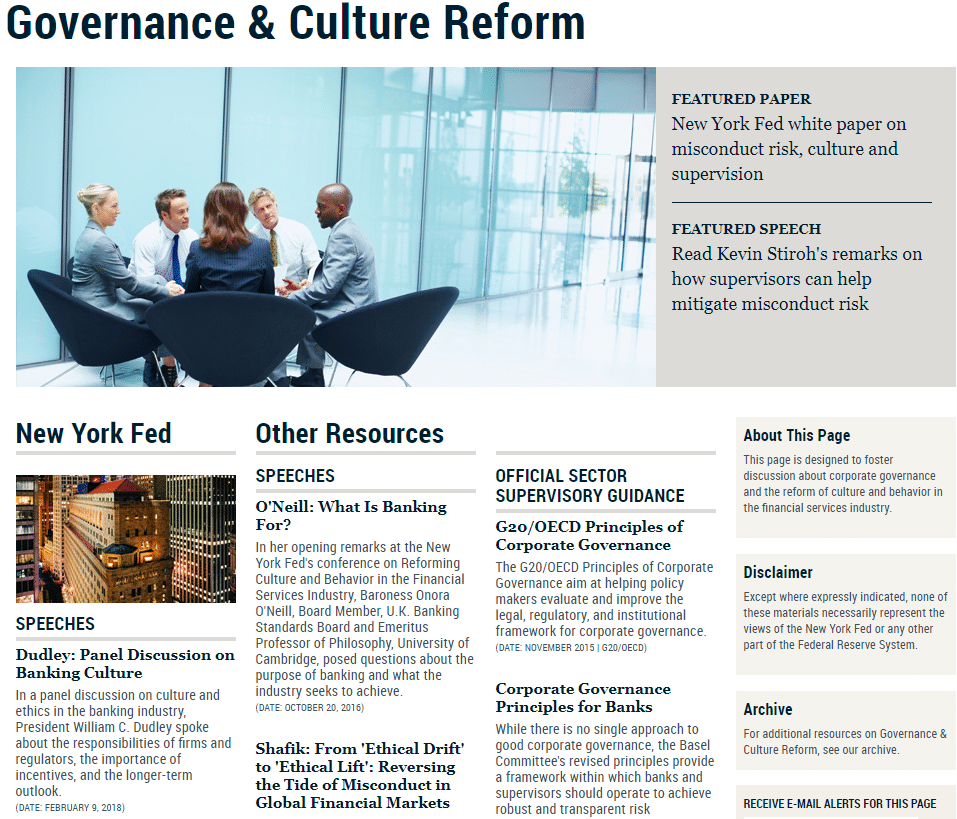 There are two new resources on the
  In a development that Andrew Ross Sorkin of The New York Times believes will cause “a firestorm” in boardrooms across the country,